

From Concept to Completion: How a Design-and-Build Project Works
When a client approaches Gridline for a commercial fit-out, the most common question we get is: how does this actually work? This post walks through our project process from initial brief to handover, so you know exactly what to expect at each stage.
Stage 1: Initial Brief and Site Assessment
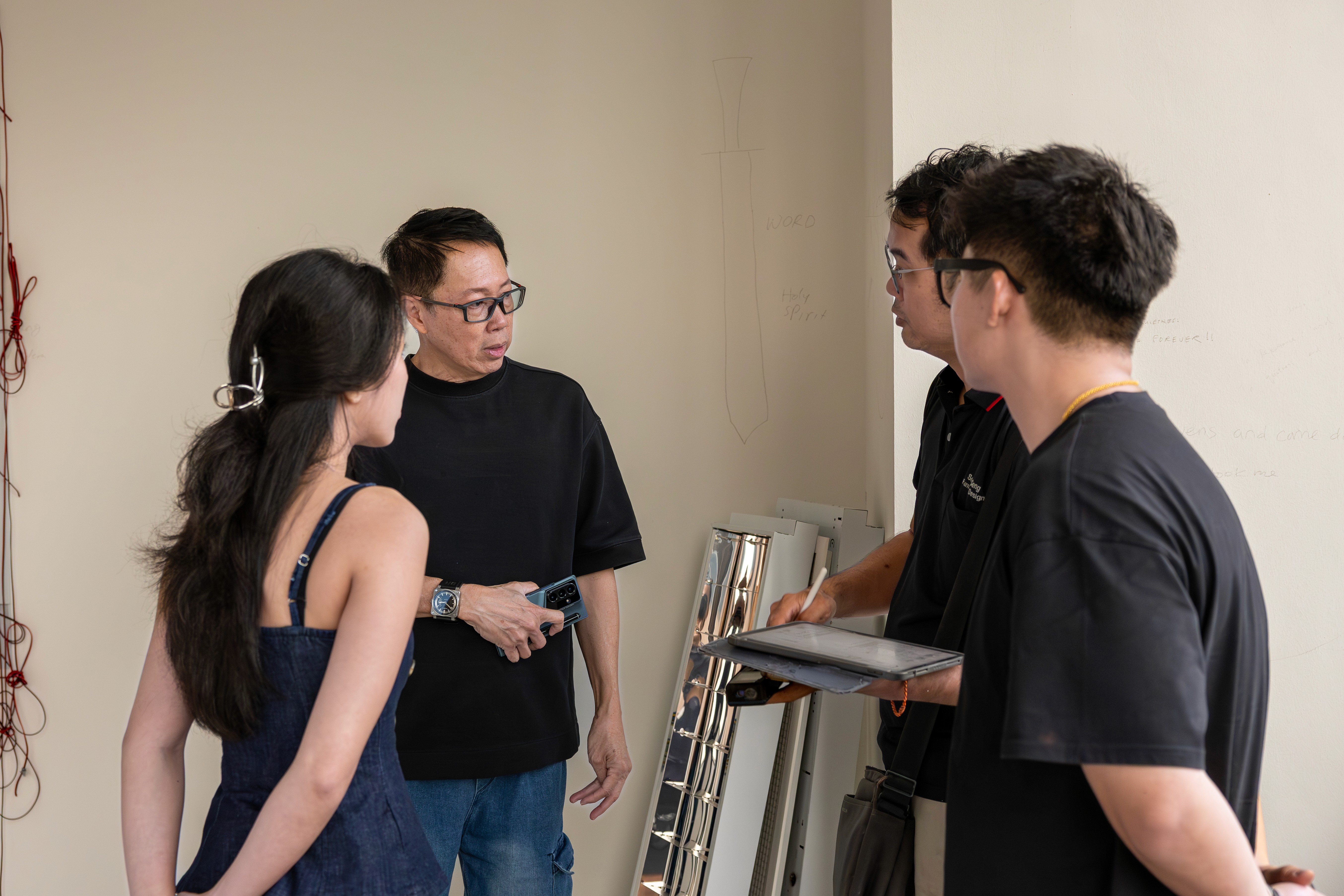
Every project starts with a conversation. We meet on-site where possible to understand the space, the business requirements, and the client's objectives. This is where we ask the questions that matter: how will the space be used day-to-day, what impression does it need to make, what is the budget and timeline, and are there any operational constraints we need to design around. From the site assessment, we produce a project brief and cost estimate that allows both parties to align before any design work begins.
Stage 2: Design Consultancy and Space Planning
Once the brief is confirmed, our design team develops initial space planning options. This covers layout, zoning, traffic flow, and the structural or M&E considerations that will shape the build. For commercial spaces, good space planning resolves the functional requirements before any aesthetics are applied. At this stage we also establish the design direction — materials, palette, lighting approach, and any brand elements that need to be integrated. This is where your identity as a business starts to become a physical design.
Stage 3: 3D Rendering and Design Sign-Off
Before any construction begins, we produce high-resolution 3D renderings of the completed space. These are true-to-life visualisations — not illustrative sketches — that allow you to see exactly what you are approving. This step eliminates surprises during or after build. If something needs to change, this is the stage to do it — not mid-construction when changes become expensive variations.
Stage 4: Construction and Project Management
With design signed off, construction begins. Our in-house project managers oversee every trade on site — carpentry, M&E, flooring, ceiling, partitioning — and coordinate between suppliers and subcontractors. Clients receive regular progress updates throughout the build. Our project management model is designed to require minimal supervision on the client's end — you have a business to run. Where timelines are tight, we sequence works to run in parallel where structurally possible. This is one of the key advantages of a design-and-build model: we have the flexibility to optimise the programme in a way that a separated design and construction contract doesn't allow.
Stage 5: Handover and Post-Completion
At project completion, we conduct a joint inspection with the client before formal handover. Any defects or snagging items are documented and resolved before the client takes possession. We provide documentation of all works completed, relevant warranties from suppliers and subcontractors, and guidance on maintenance where applicable. Post-handover, the relationship doesn't end. For clients with multiple outlets or ongoing fit-out requirements, we continue as a preferred partner for subsequent projects.
From Concept to Completion: How a Design-and-Build Project Works
When a client approaches Gridline for a commercial fit-out, the most common question we get is: how does this actually work? This post walks through our project process from initial brief to handover, so you know exactly what to expect at each stage.
Stage 1: Initial Brief and Site Assessment
Every project starts with a conversation. We meet on-site where possible to understand the space, the business requirements, and the client's objectives. This is where we ask the questions that matter: how will the space be used day-to-day, what impression does it need to make, what is the budget and timeline, and are there any operational constraints we need to design around. From the site assessment, we produce a project brief and cost estimate that allows both parties to align before any design work begins.
Stage 2: Design Consultancy and Space Planning
Once the brief is confirmed, our design team develops initial space planning options. This covers layout, zoning, traffic flow, and the structural or M&E considerations that will shape the build. For commercial spaces, good space planning resolves the functional requirements before any aesthetics are applied. At this stage we also establish the design direction — materials, palette, lighting approach, and any brand elements that need to be integrated. This is where your identity as a business starts to become a physical design.
Stage 3: 3D Rendering and Design Sign-Off
Before any construction begins, we produce high-resolution 3D renderings of the completed space. These are true-to-life visualisations — not illustrative sketches — that allow you to see exactly what you are approving. This step eliminates surprises during or after build. If something needs to change, this is the stage to do it — not mid-construction when changes become expensive variations.
Stage 4: Construction and Project Management
With design signed off, construction begins. Our in-house project managers oversee every trade on site — carpentry, M&E, flooring, ceiling, partitioning — and coordinate between suppliers and subcontractors. Clients receive regular progress updates throughout the build. Our project management model is designed to require minimal supervision on the client's end — you have a business to run. Where timelines are tight, we sequence works to run in parallel where structurally possible. This is one of the key advantages of a design-and-build model: we have the flexibility to optimise the programme in a way that a separated design and construction contract doesn't allow.
Stage 5: Handover and Post-Completion
At project completion, we conduct a joint inspection with the client before formal handover. Any defects or snagging items are documented and resolved before the client takes possession. We provide documentation of all works completed, relevant warranties from suppliers and subcontractors, and guidance on maintenance where applicable. Post-handover, the relationship doesn't end. For clients with multiple outlets or ongoing fit-out requirements, we continue as a preferred partner for subsequent projects.
From Concept to Completion: How a Design-and-Build Project Works
When a client approaches Gridline for a commercial fit-out, the most common question we get is: how does this actually work? This post walks through our project process from initial brief to handover, so you know exactly what to expect at each stage.
Stage 1: Initial Brief and Site Assessment
Every project starts with a conversation. We meet on-site where possible to understand the space, the business requirements, and the client's objectives. This is where we ask the questions that matter: how will the space be used day-to-day, what impression does it need to make, what is the budget and timeline, and are there any operational constraints we need to design around. From the site assessment, we produce a project brief and cost estimate that allows both parties to align before any design work begins.
Stage 2: Design Consultancy and Space Planning
Once the brief is confirmed, our design team develops initial space planning options. This covers layout, zoning, traffic flow, and the structural or M&E considerations that will shape the build. For commercial spaces, good space planning resolves the functional requirements before any aesthetics are applied. At this stage we also establish the design direction — materials, palette, lighting approach, and any brand elements that need to be integrated. This is where your identity as a business starts to become a physical design.
Stage 3: 3D Rendering and Design Sign-Off
Before any construction begins, we produce high-resolution 3D renderings of the completed space. These are true-to-life visualisations — not illustrative sketches — that allow you to see exactly what you are approving. This step eliminates surprises during or after build. If something needs to change, this is the stage to do it — not mid-construction when changes become expensive variations.
Stage 4: Construction and Project Management
With design signed off, construction begins. Our in-house project managers oversee every trade on site — carpentry, M&E, flooring, ceiling, partitioning — and coordinate between suppliers and subcontractors. Clients receive regular progress updates throughout the build. Our project management model is designed to require minimal supervision on the client's end — you have a business to run. Where timelines are tight, we sequence works to run in parallel where structurally possible. This is one of the key advantages of a design-and-build model: we have the flexibility to optimise the programme in a way that a separated design and construction contract doesn't allow.
Stage 5: Handover and Post-Completion
At project completion, we conduct a joint inspection with the client before formal handover. Any defects or snagging items are documented and resolved before the client takes possession. We provide documentation of all works completed, relevant warranties from suppliers and subcontractors, and guidance on maintenance where applicable. Post-handover, the relationship doesn't end. For clients with multiple outlets or ongoing fit-out requirements, we continue as a preferred partner for subsequent projects.
Let's make something wonderful.
Visit Us
Address: 39 Woodlands Close, Mega@Woodlands, #05-14
Email: hello@gridlinedesign.sg
Number: +65 9617 2217
© 2025 Gridline Design. All rights reserved.
Website Built and Designed by Attune.
Let's make something wonderful.
Visit Us
Address: 39 Woodlands Close, Mega@Woodlands, #05-14
Email: hello@gridlinedesign.sg
Number: +65 9617 2217
© 2025 Gridline Design. All rights reserved. Website Built and Designed by Attune.